Rethinking counterterrorism beyond crackdowns – Copy

The path towards countering terrorism or violent extremism in Bangladesh is precarious. It is well documented how the Awami League’s “zero tolerance against terrorism” policy had engendered unprecedented levels of harm within the nation through enforced disappearances and extrajudicial killings. The regime had adopted a punitive and securitised approach to counterterrorism (CT) and countering violent extremism (CVE) through preemptive measures based on arbitrary arrests and detention.
Rethinking counterterrorism beyond crackdowns

The path towards countering terrorism or violent extremism in Bangladesh is precarious. It is well documented how the Awami League’s “zero tolerance against terrorism” policy had engendered unprecedented levels of harm within the nation through enforced disappearances and extrajudicial killings. The regime had adopted a punitive and securitised approach to counterterrorism (CT) and countering violent extremism (CVE) through preemptive measures based on arbitrary arrests and detention.
Bangladesh After the February Turn: Governing Reform, Containing Corruption, and Preserving Democratic Momentum
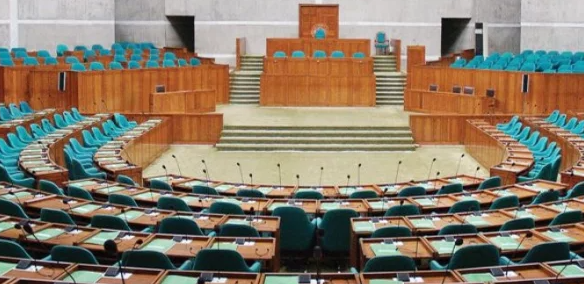
Executive Summary Bangladesh has re-entered democratic rule, and the new government begins with a strong mandate. Yet that mandate is not self-executing. The referendum created expectations of deep structural reform without resolving how reform should be sequenced and institutionalized. The risk remains that Bangladesh will restore elections without deepening its institutions. That is especially acute at the local level, where extortion, patronage, and informal coercion often outlive formal political change, while parliament faces a serious capacity challenge because many members lack experience in legislative processes, committee work, and constitutional bargaining. Externally, the government must navigate foreign-policy challenges without allowing a return to the kind of external dependency and patronage associated with the Awami League era. Internally, it must confront the equally delicate questions of law and order and the delivery of justice, since demands for trials and accountability are central to the moral legitimacy of the transition. Stabilizing this new era requires the government to govern with restraint, enforce discipline within both party ranks and the administrative apparatus, accommodate a constructive parliamentary opposition, and pursue a pragmatic, non-partisan approach to legal and foreign affairs.